MIT6.231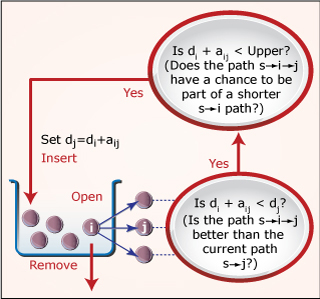
- 难度
- 中阶
- 形式
- 大学课程
- 语言
- 英文
- 规模
- 23 个课节
- 内容费用
- 免费
- 动手
- 需要动手环境
第一次学这门课?先完成学前准备,把课程目录搭好。
每节课这样学
- 发提示词把下面的每课提示词发给 AI Agent,它会准备这一课的练习文件。
- 学官方课节打开对应课节学习,按提示从第一道练习做起;它不会替你写答案。
- 记进度学完让 AI Agent 在 progress.md 勾选,并把疑问整理到 questions.md。
每课提示词 · 每次学习前用
继续学习「MIT 6.231:Dynamic Programming and Stochastic Control(2015 秋)」。课程目录是 mit-6231-fall2015/(不知道完整路径就先问我)。
1. 读 progress.md,找到下一课;如果我指定了第几课,就准备那一课。
2. 打开这一课的官方页面和本地讲义,列出本课练习要用的工具、文件和样例数据。缺少的先告诉我,等我同意再安装或下载。
3. 在 lessons/ 对应的课节文件夹里准备好练习:exercises/ 里给每道题建一个文件,写上题号和题目原文链接,不写答案;已有文件保留,样例数据放到 data/。拿不到官方题目或起始代码时记录限制,不编造替代品。
4. 按 README 运行开课时生成的自检脚本或在线检查清单,并检查本课新增工具能否正常使用。
5. 告诉我:本课先读哪几节、从哪道练习开始、大约需要多久。我学完后,帮我在 progress.md 勾选并把问题整理到 questions.md。

边界:
- 需要管理员权限、会产生费用或需要填写密钥的操作,先告诉我原因,等我同意。密钥由我在本机配置,不发到聊天,不写进笔记或版本库;原项目需要 .env 时确认已被 Git 忽略。
- 不替我写练习或作业答案,也不替我提交。我卡住时只给提示;我明确要求时才给解答。
- 只下载许可允许个人保存的材料;其余只放链接。不把未运行的命令说成成功。
课节共 23 节 · 官方顺序
- 01Lecture 1:Introduction to Dynamic Programming Examples of Dynamic Programming Significance of Feedback
- 02Lecture 2:The Basic Problem Principle of Optimality The General Dynamic Programming Algorithm State Augmentation
- 03Lecture 3:Deterministic Finite-State Problem Backward Shortest Path Algorithm Forward Shortest Path Algorithm Alternative Shortest Path Algorithms
- 04Lecture 4:Examples of Stochastic Dynamic Programming Problems Linear-Quadratic Problems Inventory Control
- 05Lecture 5:Stopping Problems Scheduling Problems Minimax Control
- 06Lecture 6:Problems with Imperfect State Info Reduction to the Perfect State Info Cas Linear Quadratic Problems Separation of Estimation and Control
- 07Lecture 7:Imperfect State Information Sufficient Statistics Conditional State Distribution as a Sufficient Statistic Finite-State Analysis
- 08Lecture 8:Suboptimal Control Cost Approximation Methods: Classification Certainty Equivalent Control Limited Lookahead Policies Performance Bounds Problem Approximation Approach Parametric Cost-To-Go Approximation
- 09Lecture 9:Rollout Algorithms Cost Improvement Property Discrete Deterministic Problems Approximations to Rollout Algorithms Model Predictive Control (MPS) Discretization of Continuous Time Discretization of Continuous Space Other Suboptimal Approaches
- 10Lecture 10:Infinite Horizon Problems Stochastic Shortest Path (SSP) Problems Bellman’s Equation Dynamic Programming – Value Iteration Discounted Problems as a Special Case of SSP
- 11Lecture 11:Review of Stochastic Shortest Path Problems Computation Methods for SSP Computational Methods for Discounted Problems
- 12Lecture 12:Average Cost Per Stage Problems Connection With Stochastic Shortest Path Problems Bellman’s Equation Value Iteration, Policy Iteration
展开其余 11 节
- 13Lecture 13:Control of Continuous-Time Markov Chains: Semi-Markov Problems Problem Formulation: Equivalence to Discrete-Time Problems Discounted Problems Average Cost Problems
- 14Lecture 14:Introduction to Advanced Infinite Horizon Dynamic Programming and Approximation Methods
- 15Lecture 15:Review of Basic Theory of Discounted Problems Monotonicity of Contraction Properties Contraction Mappings in Dynamic Programming Discounted Problems: Countable State Space with Unbounded Costs Generalized Discounted Dynamic Programming An Introduction to Abstract Dynamic Programming
- 16Lecture 16:Review of Computational Theory of Discounted Problems Value Iteration (VI) Policy Iteration (PI) Optimistic PI Computational Methods for Generalized Discounted Dynamic Programming Asynchronous Algorithms
- 17Lecture 17:Undiscounted Problems Stochastic Shortest Path Problems Proper and Improper Policies Analysis and Computational Methods for SSP Pathologies of SSP SSP Under Weak Conditions
- 18Lecture 18:Undiscounted Total Cost Problems Positive and Negative Cost Problems Deterministic Optimal Cost Problems Adaptive (Linear Quadratic) Dynamic Programming Affine Monotomic and Risk Sensitive Problems
- 19Lecture 19:Introduction to approximate Dynamic Programming Approximation in Policy Space Approximation in Value Space, Rollout / Simulation-based Single Policy Iteration Approximation in Value Space Using Problem Approximation
- 20Lecture 20:Discounted Problems Approximate (fitted) VI Approximate PI The Projected Equation Contraction Properties: Error Bounds Matrix Form of the Projected Equation Simulation-based Implementation LSTD, LSPE, and TD Methods
- 21Lecture 21:Review of Approximate Policy Iteration Projected Equation Methods for Policy Evaluation Simulation-Based Implementation Issues, Multistep Projected Equation Methods Bias-Variance Tradeoff Exploration-Enhanced Implementations, Oscillations
- 22Lecture 22:Aggregation as an Approximation Methodology Aggregate Problem Simulation-based Aggregation Q-Learning
- 23Lecture 23:Additional Topics in Advanced Dynamic Programming Stochastic Shortest Path Problems Average Cost Problems Generalizations Basis Function Adaptation Gradient-based Approximation in Policy Space An Overview
来源与使用须知
- 原始资源
- MIT 6.231 收录版本:2015 秋
- 收录时间
- 本站首次收录 2026-10-10
- 指南参考
- 官方课节顺序及材料入口
版权与转载
- CC BY-NC-SA 4.0:可转载和改编,需署名;仅限非商业用途;改编作品须使用相同许可;适用范围以原站说明为准,第三方材料可能另有条款。原站说明
- 本站只提供原始链接和学习指南,不转载、不镜像课程材料;课程图像来自原站,版权与商标归原权利人;引用时请注明原作者与出处。